AML and unmet needs
AML is a rapidly progressing tumor that develops when at least 20% of the bone marrow cells consist of immature white blood cells (“leukemia blasts”), leading to bone marrow failure to produce healthy blood cells.
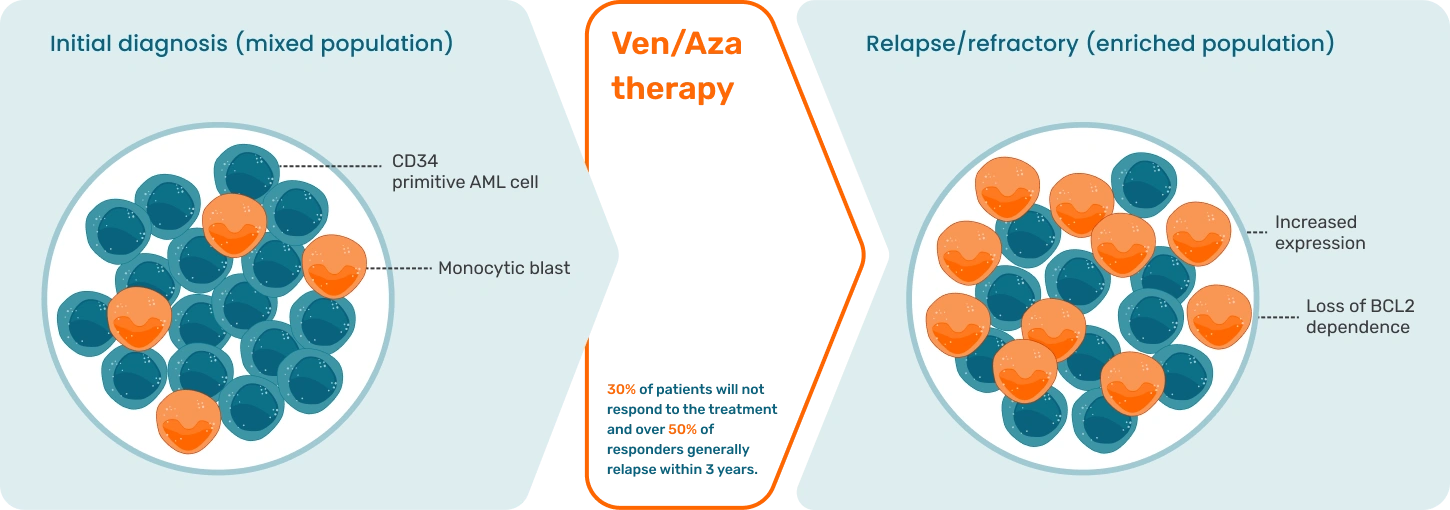
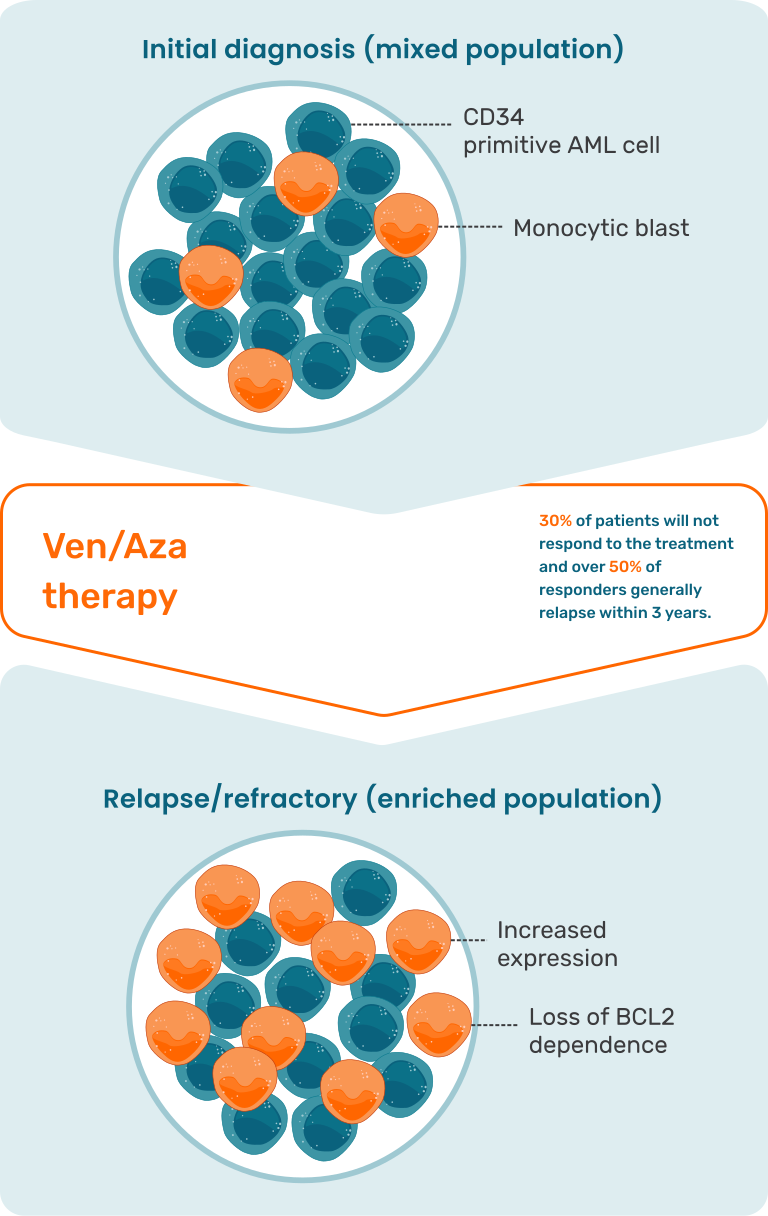
Despite available treatments, including intensive chemotherapy or venetoclax-based combinations, approximately 20-40% of newly diagnosed patients do not achieve complete recovery and more than 50% relapse within 3 years.
For relapse or refractory AML patients, some targeted therapies can be used, but a significant number of patients have no actionable biomarkers. As a result, AML remains a devastating disease in need of more efficacious and safer therapies.



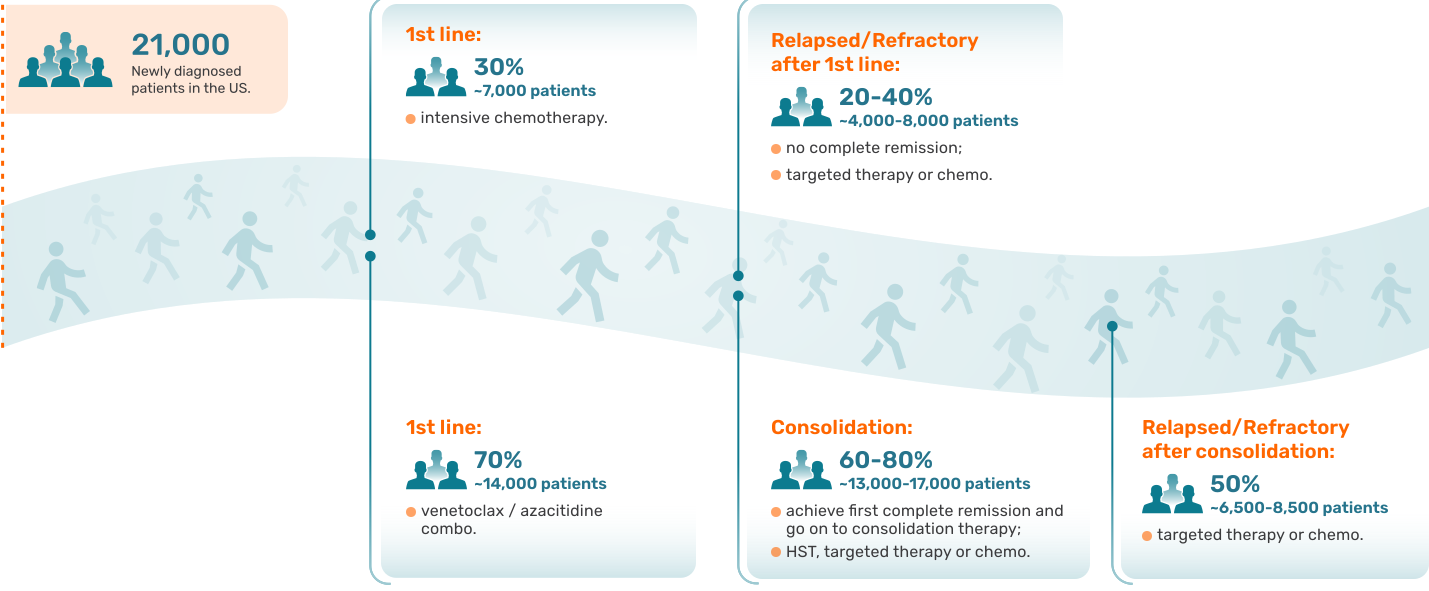
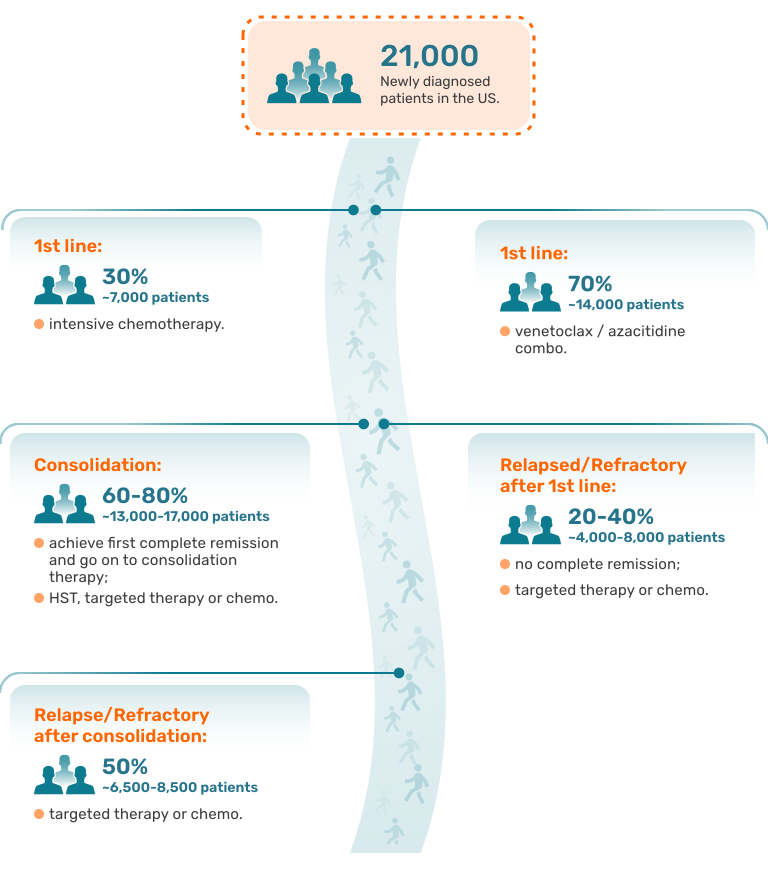
AMB-104 ADC for the treatment of AML
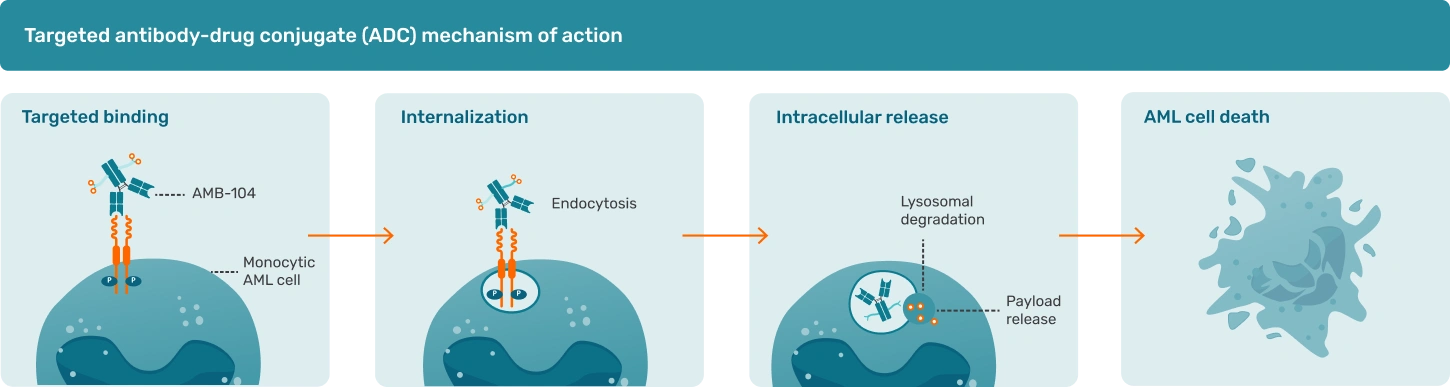
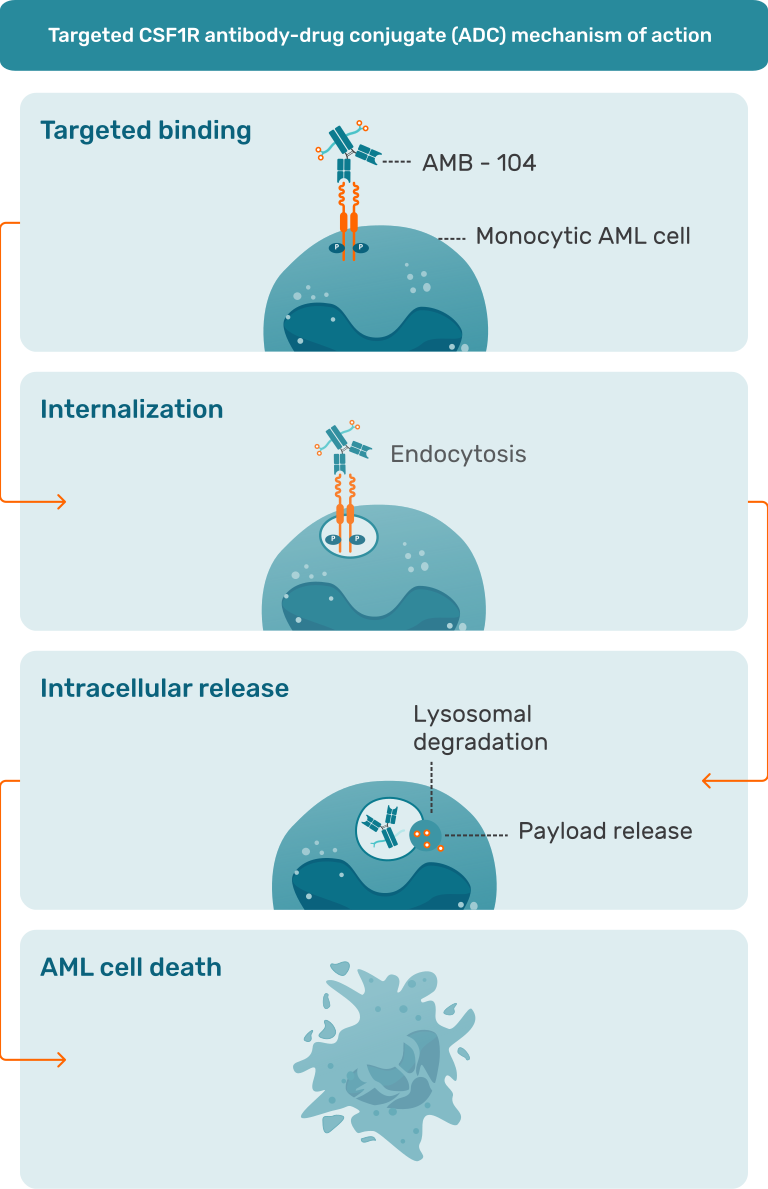
AMB-104 targets AML cancer cells with a proven cytotoxic payload and has broad application for use across a range of AML patient populations.
The development of AMB-104 for AML is supported by a robust preclinical data package that includes, among other things, efficient internalization into AML cells, stability of the ADC in the blood, and robust in vitro and in vivo efficacy data.
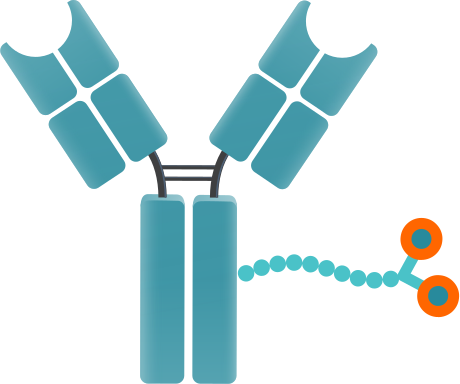
AmMax's antibody
- Clinically validated target engagement.
- Proven strong binding affinity and internalization in AML cells.
Proven linker
- Linker-payload has been tested in multiple Phase 1/2 clinical studies.
- Cytotoxic payload efficacy has been clinically validated.
Targeting Rationale of AMB-104
Monocytic expansion within AML cells drives resistance to ven/aza treatments and creates a targetable state.
AMB-104 has the potential to address primary AML as well as relapsed/refractory (R/R) AML patients via the delivery of its toxic payload to monocytic AML cells.
Understanding Ven/Aza resistance in AML:
the rise of specific monocytic cells